
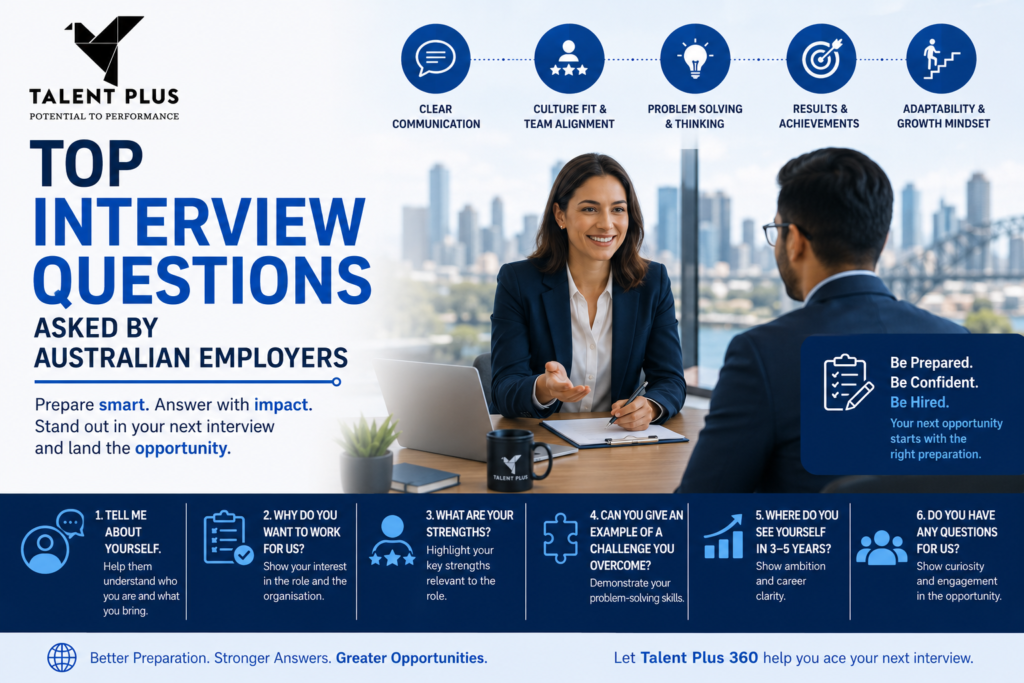
Australia continues to attract skilled professionals from around the world due to its strong economy, excellent work culture, and growing career opportunities. From healthcare and hospitality to IT, engineering, and construction, Australian employers are constantly searching for talented workers.
However, securing a job in Australia involves more than simply having the right qualifications. Employers also focus heavily on communication skills, confidence, teamwork, and cultural fit during the interview process.
Understanding the most common interview questions asked by Australian employers can help job seekers prepare effectively and improve their chances of getting hired faster.
At Talent Plus 360, we help skilled professionals prepare for interviews, improve resumes, and connect with employers looking for reliable and qualified talent across multiple industries.
Why Interview Preparation Is Important in Australia
Australian employers value professionalism, honesty, and practical communication during interviews. They often look beyond technical skills to understand how candidates handle challenges and work within teams.
A well-prepared candidate usually creates a stronger first impression and demonstrates confidence during the hiring process. Preparation also helps applicants answer questions more clearly and professionally.
Many skilled migrants struggle during interviews because they are unfamiliar with Australian workplace expectations and interview styles.
Practicing common interview questions beforehand can help candidates feel more relaxed and improve their overall performance significantly.
1. Tell Me About Yourself
This is one of the most commonly asked interview questions in Australia. Employers use this question to understand your background, experience, and communication style.
Candidates should focus on professional information rather than personal details. A strong answer usually includes work experience, qualifications, key achievements, and career goals.
Australian employers generally prefer concise and structured answers instead of overly long introductions. Keeping the response professional and confident is important.
A well-prepared introduction helps create a positive first impression early in the interview process.
2. Why Do You Want to Work With Our Company?
This question helps employers understand whether candidates have researched the company and genuinely understand the role being offered.
Interviewers want to see enthusiasm, motivation, and alignment between the candidate’s goals and the company’s values or industry focus.
Candidates should mention specific reasons such as company reputation, career growth opportunities, workplace culture, or interest in the industry.
Generic answers often reduce impact, so researching the company beforehand is highly recommended.
3. What Are Your Strengths?
Australian employers often ask this question to understand the candidate’s key professional abilities and workplace value.
Candidates should focus on strengths relevant to the job role, such as communication, leadership, problem-solving, teamwork, technical expertise, or adaptability.
Providing practical examples helps make the answer more credible and engaging during the interview discussion.
Confidence is important, but candidates should avoid sounding arrogant or overly rehearsed.
4. What Is Your Biggest Weakness?
This question can feel uncomfortable for many candidates, but employers mainly ask it to evaluate self-awareness and willingness to improve.
A good strategy is to mention a genuine weakness while also explaining the steps being taken to improve that area professionally.
Australian employers usually appreciate honesty and accountability more than unrealistic “perfect employee” answers.
The goal is to demonstrate growth mindset and professional maturity during the interview.
5. Why Did You Leave Your Previous Job?
Employers ask this question to understand career transitions, professional goals, and workplace attitude.
Candidates should answer professionally and avoid speaking negatively about previous employers or colleagues, even if past experiences were challenging.
Good answers may focus on career growth, better opportunities, relocation, skill development, or seeking new professional challenges.
Maintaining a positive tone helps create a more professional impression overall.
6. Describe a Difficult Situation You Handled at Work
Behavioral interview questions are extremely common in Australian workplaces. Employers often ask candidates to explain how they handled workplace challenges or pressure situations.
Candidates should answer using real examples that demonstrate problem-solving skills, communication, teamwork, and professionalism.
Using the STAR method — Situation, Task, Action, and Result — can help structure responses clearly and effectively.
Well-structured examples often leave a stronger impact during interviews.
7. How Do You Handle Pressure or Deadlines?
Australian employers value candidates who can remain calm, productive, and organized under pressure.
Interviewers want to know whether applicants can manage workloads, prioritize tasks, and maintain professionalism during stressful situations.
Candidates should provide examples showing time management, planning skills, teamwork, and ability to meet deadlines successfully.
Strong answers demonstrate reliability and workplace maturity.
8. Are You Comfortable Working in a Team?
Teamwork is highly valued in Australian workplaces across almost every industry. Employers look for candidates who can collaborate respectfully with colleagues from diverse backgrounds.
Interviewers may ask for examples of successful teamwork experiences or situations where candidates supported colleagues during projects.
Candidates should highlight communication skills, adaptability, cooperation, and willingness to contribute positively within teams.
Employers generally prefer team-oriented employees who can maintain healthy workplace relationships.
9. Where Do You See Yourself in Five Years?
This question helps employers understand long-term career goals, ambition, and commitment to professional growth.
Candidates should discuss realistic career development plans that align with the industry and potential opportunities within the company.
Australian employers appreciate motivated candidates who are eager to learn and grow professionally over time.
However, answers should remain practical rather than overly ambitious or unrealistic.
10. Why Should We Hire You?
This is often one of the final and most important interview questions asked by employers. It gives candidates an opportunity to summarize their strengths and value.
Candidates should explain how their skills, experience, qualifications, and attitude make them suitable for the position.
Strong answers focus on solving employer needs rather than simply listing personal achievements.
Confidence, professionalism, and clarity are essential when answering this question effectively.
11. How Do You Adapt to New Environments?
Australian workplaces are multicultural and dynamic, so employers value adaptability and willingness to learn quickly.
This question is especially common for skilled migrants and international workers applying for jobs in Australia.
Candidates should discuss experiences where they successfully adjusted to changes, new systems, or diverse work environments.
Adaptability often reflects strong problem-solving abilities and positive workplace attitude.
12. What Are Your Salary Expectations?
Salary-related questions are common during Australian interviews, especially during later recruitment stages.
Candidates should research industry salary standards before interviews to provide realistic and professional responses.
Giving flexible and market-aligned expectations usually creates a more balanced negotiation discussion.
Professional communication during salary discussions helps maintain a positive impression with employers.
Common Interview Mistakes Candidates Should Avoid
Many candidates fail interviews not because of lack of skills, but because of poor preparation or communication mistakes.
Arriving late, speaking negatively about previous employers, giving unclear answers, or failing to research the company can create negative impressions quickly.
Overconfidence and lack of eye contact may also affect interview performance significantly during employer evaluations.
Practicing interview questions and preparing professionally can help candidates avoid these common mistakes effectively.
Tips to Succeed in Australian Job Interviews
Candidates should dress professionally, arrive on time, and maintain positive body language throughout the interview process.
Listening carefully before answering questions is important because Australian employers value clear and direct communication.
Preparing examples from previous work experience can help candidates answer behavioral questions more confidently and naturally.
Following up with a polite thank-you email after the interview can also leave a professional impression.
How Talent Plus 360 Helps Job Seekers
At Talent Plus 360, we understand the challenges skilled migrants and professionals face when applying for jobs in competitive markets.
Our recruitment experts help candidates improve resumes, prepare for interviews, understand employer expectations, and connect with suitable job opportunities.
We focus on building confidence and helping candidates present themselves professionally during every stage of the recruitment process.
Whether you are searching for your first job in Australia or planning career growth, Talent Plus 360 provides trusted recruitment support tailored to your goals.
Final Thoughts
Job interviews play a major role in securing career opportunities in Australia. Employers look for more than technical qualifications — they also value communication, confidence, teamwork, and professional attitude.
Preparing for common interview questions can help candidates improve confidence, reduce stress, and perform more effectively during recruitment processes.
Understanding employer expectations and practicing structured answers can significantly improve hiring success rates in competitive industries.
Visit Talent Plus 360 today and discover how professional recruitment support can help you prepare for interviews and achieve your career goals faster.