
Running a successful business in Australia involves much more than generating sales and managing daily operations. Employers must also meet a range of workplace compliance obligations designed to protect both businesses and employees.
One of the most important responsibilities is maintaining accurate and up-to-date employment records. Proper record-keeping supports legal compliance, improves workforce management, and helps businesses respond effectively to audits, disputes, and workplace investigations.
Despite its importance, many employers underestimate the value of structured employment record management. Missing documents, incomplete files, and inconsistent record-keeping practices can expose businesses to unnecessary risks and penalties.
At Talent Plus 360, we help Australian businesses strengthen workforce management practices through recruitment support, HR guidance, and compliance-focused employment solutions that support sustainable business growth.
Why Employment Records Matter
Employment records provide a clear and documented history of the employment relationship between an employer and an employee.
These records help businesses demonstrate compliance with workplace laws, verify employee entitlements, and support fair employment practices.
Accurate records also provide valuable protection when disputes arise regarding pay, leave, working hours, performance management, or termination decisions.
Without reliable documentation, businesses may struggle to prove compliance during audits or workplace investigations.
Understanding Employment Record Compliance
Employment record compliance refers to maintaining accurate employee information in accordance with Australian workplace laws and regulations.
Employers are generally expected to keep specific records relating to wages, working hours, leave balances, superannuation contributions, and employment agreements.
Compliance requirements exist to ensure transparency, accountability, and fairness within Australian workplaces.
Businesses that establish strong record-keeping systems are often better positioned to manage workforce risks effectively.
The Risks of Poor Record-Keeping
Poor record management can create serious consequences for businesses of all sizes.
Missing records may lead to payroll disputes, employee complaints, legal challenges, and difficulties during compliance reviews.
Inconsistent documentation can also affect decision-making, workforce planning, and overall operational efficiency.
For many businesses, compliance issues often arise not from intentional misconduct but from inadequate systems and processes.
Essential Employment Records Every Business Should Maintain
Every Australian employer should maintain a comprehensive employment file for each employee.
These files should contain key employment documents, payroll information, leave records, performance documentation, and relevant workplace correspondence.
Keeping records organized and accessible helps businesses respond quickly when information is required.
A structured approach reduces administrative confusion and supports stronger compliance outcomes.
Employee Personal Information
Employee files should contain accurate personal information collected during onboarding.
This typically includes full name, address, contact details, emergency contacts, tax information, and identification records where appropriate.
Maintaining accurate employee information helps ensure effective communication and administrative efficiency.
Regular updates should be encouraged whenever employee details change.
Employment Agreements and Contracts
Employment contracts form the foundation of the employment relationship.
These agreements outline important conditions such as job responsibilities, salary arrangements, working hours, notice periods, and workplace expectations.
Maintaining signed copies of employment agreements helps protect both employers and employees.
Clear documentation can reduce misunderstandings and support consistent workplace practices.
Payroll Records
Payroll records are among the most critical employment documents businesses must maintain.
These records typically include wages paid, deductions, allowances, bonuses, overtime payments, and pay periods.
Accurate payroll records help demonstrate compliance with employment obligations and employee entitlements.
Well-maintained payroll systems also reduce the likelihood of disputes and administrative errors.
Timesheets and Working Hours
Recording employee working hours is an important compliance requirement for many businesses.
Timesheets help verify attendance, overtime, shift patterns, and working arrangements.
Accurate time records support payroll accuracy and provide evidence if questions arise regarding hours worked.
Digital time-tracking systems can improve consistency and reduce administrative burden.
Leave Records
Employee leave records should be maintained carefully and updated regularly.
This includes annual leave, personal leave, parental leave, long service leave, and any other approved leave arrangements.
Accurate leave records help businesses manage workforce planning and ensure employee entitlements are tracked correctly.
Transparent leave management contributes to stronger workplace relationships and trust.
Superannuation Records
Australian employers must meet superannuation obligations for eligible employees.
Maintaining detailed records of superannuation contributions is essential for compliance and financial accountability.
These records help verify payments and demonstrate that obligations have been met appropriately.
Strong documentation can be particularly valuable during audits or employee inquiries.
Performance Management Documentation
Performance management records provide valuable evidence regarding employee development and workplace discussions.
Documentation may include performance reviews, coaching sessions, improvement plans, achievements, and feedback conversations.
Maintaining accurate records helps support fair and objective performance management processes.
Clear documentation can also reduce risks associated with disciplinary actions or employment disputes.
Training and Development Records
Employee training records help businesses track workforce capabilities and compliance requirements.
These records may include certifications, professional development programs, workplace training sessions, and industry qualifications.
Training documentation supports workforce planning and demonstrates commitment to employee growth.
It can also be valuable when verifying competency requirements for specific roles.
Workplace Health and Safety Records
Workplace health and safety remains a critical responsibility for Australian employers.
Businesses should maintain records relating to safety training, incident reports, risk assessments, and workplace inspections.
Accurate documentation supports safer workplaces and demonstrates proactive risk management practices.
Strong safety records also contribute to compliance and employee wellbeing.
Managing Digital Employment Records
Technology has transformed the way businesses manage employee information.
Digital record-keeping systems offer improved accessibility, security, and efficiency compared to traditional paper-based processes.
Cloud-based solutions can simplify document management while supporting compliance requirements.
However, businesses must also ensure employee information remains protected and confidential.
Data Security and Privacy Considerations
Employment records often contain sensitive personal and financial information.
Businesses must implement appropriate security measures to protect employee data from unauthorized access or misuse.
Secure storage systems, restricted access controls, and regular data reviews help strengthen information security practices.
Protecting employee information supports trust and reduces compliance risks.
Building a Record-Keeping Culture
Effective compliance is not simply about storing documents.
Organizations should create a workplace culture that values accuracy, accountability, and documentation consistency.
Managers, HR teams, and payroll staff all play important roles in maintaining employment records correctly.
Regular reviews and internal processes help ensure information remains accurate and complete.
Common Record-Keeping Mistakes
Many businesses encounter compliance challenges due to avoidable record-keeping mistakes.
Common issues include incomplete employee files, outdated information, inconsistent documentation practices, and poor document storage systems.
Failing to update records regularly can also create significant administrative difficulties over time.
Identifying and addressing these weaknesses early helps reduce future risks.
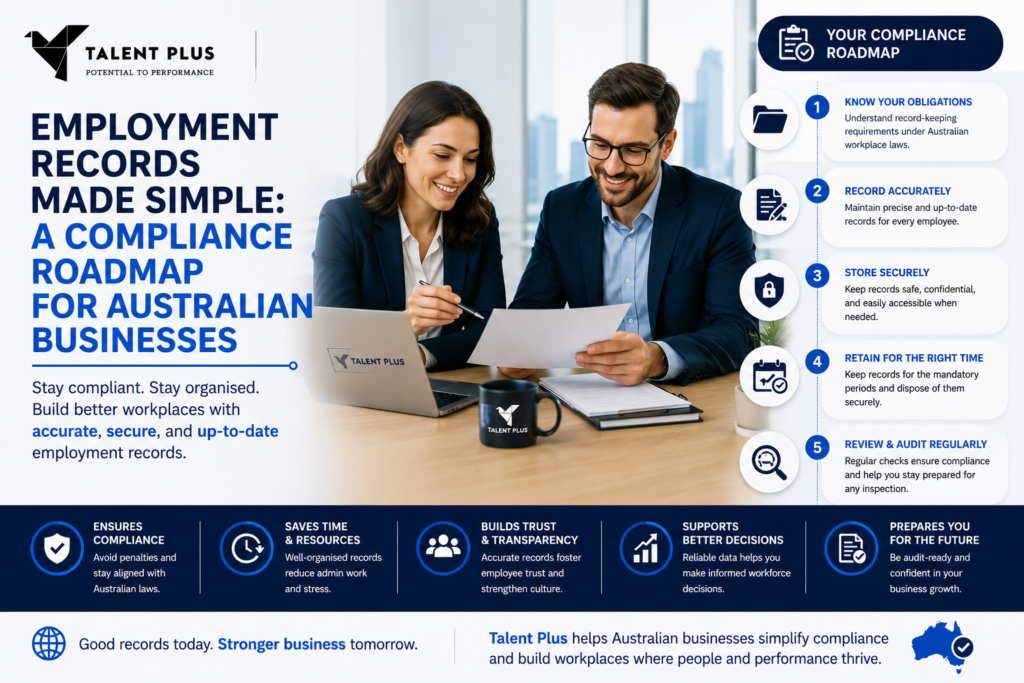
Creating a Compliance Roadmap
A structured compliance roadmap helps businesses manage employment records more effectively.
The process begins with identifying required documentation, implementing consistent systems, and establishing clear responsibilities.
Regular audits can help identify gaps and ensure records remain accurate and current.
Continuous improvement supports stronger compliance outcomes and better workforce management.
How Employment Records Support Business Growth
Employment records are not just compliance tools; they are valuable business assets.
Accurate workforce data supports strategic planning, performance management, recruitment decisions, and employee development initiatives.
Businesses with strong record-keeping practices often make more informed decisions and operate more efficiently.
Good documentation creates a stronger foundation for sustainable growth and long-term success.
Why Australian Businesses Need a Proactive Approach
Australian workplace regulations continue to evolve, making proactive compliance increasingly important.
Businesses that prioritize employment records are often better prepared to respond to regulatory changes, audits, and workforce challenges.
A proactive approach reduces risk while supporting stronger operational performance.
Investing in compliance today can prevent significant problems in the future.
How Talent Plus 360 Supports Australian Employers
At Talent Plus 360, we understand that successful workforce management goes beyond recruitment alone.
We work with Australian businesses to strengthen hiring processes, workforce planning, compliance practices, and employee management strategies.
Our expertise helps employers build stronger teams while maintaining effective employment practices and workplace standards.
By supporting both recruitment and workforce compliance, we help businesses create environments where people and performance thrive together.
Why Choose Talent Plus 360?
As an Australian company, Talent Plus 360 is committed to helping employers navigate the complexities of workforce management with confidence.
Our team understands the challenges businesses face when balancing compliance obligations with growth objectives.
We provide practical recruitment and workforce solutions designed to support operational success and long-term sustainability.
Whether you are expanding your workforce or improving employment processes, Talent Plus 360 offers trusted support tailored to your business needs.
Final Thoughts
Employment records are far more than administrative paperwork. They are essential tools for compliance, workforce management, risk reduction, and business success.
By maintaining accurate records, implementing consistent processes, and adopting a proactive compliance mindset, Australian businesses can protect themselves while creating stronger workplace foundations.
Effective record-keeping supports transparency, accountability, and better decision-making across every stage of the employee lifecycle.
Visit Talent Plus 360 today to discover how professional workforce solutions can help your business build stronger teams, improve compliance, and achieve sustainable growth.