
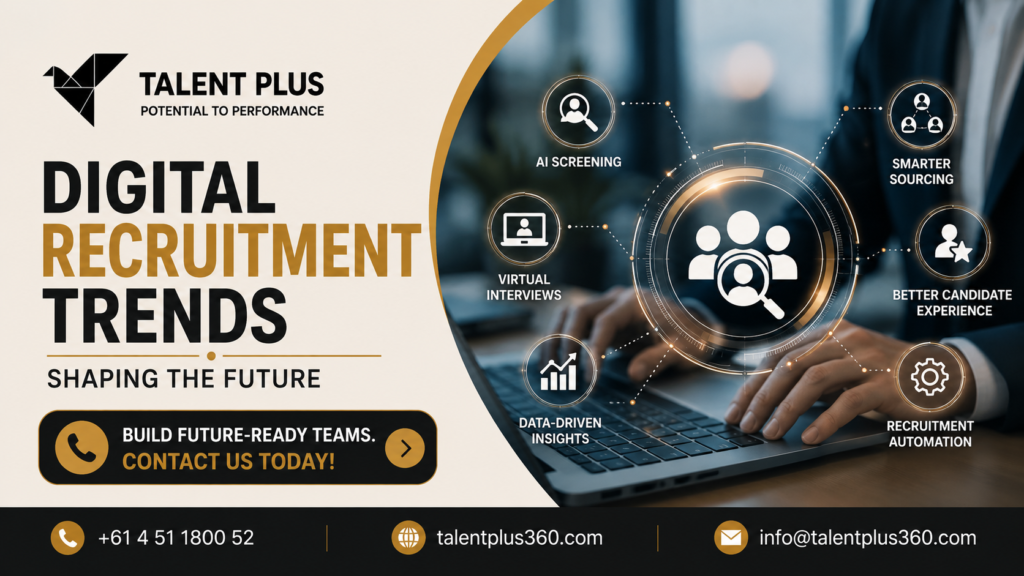
Recruitment is changing rapidly as businesses adopt digital tools to find, assess, and connect with potential employees. Traditional hiring methods are increasingly being supported by automation, data, online interviews, and smarter sourcing platforms. These changes are helping organisations reach talent more efficiently while creating a more convenient experience for candidates. For businesses looking to remain competitive, understanding digital recruitment trends is becoming increasingly important.
The future of hiring will not depend on technology alone. The most effective recruitment strategies will combine digital innovation with human judgement. Technology can simplify repetitive tasks and provide useful insights, while experienced recruiters bring communication, empathy, and industry knowledge to the final hiring decision.
AI-Powered Candidate Screening
Artificial intelligence is becoming an increasingly useful tool for handling large numbers of applications. Recruitment platforms can analyse resumes, identify relevant skills, and organise applicants according to specific role requirements.
This can significantly reduce the time recruiters spend on repetitive screening. However, human review remains important because experience, personality, motivation, and cultural alignment cannot always be understood from application data alone.
Data-Driven Hiring Decisions
Recruitment teams are increasingly using data to understand how effectively their hiring strategies are performing. Information such as application sources, time to hire, candidate engagement, and employee retention can reveal where improvements are needed.
Using these insights allows businesses to make recruitment decisions based on evidence rather than assumptions. Over time, this can help organisations improve efficiency, manage hiring budgets, and identify stronger sources of talent.
Virtual Interviews Are Here to Stay
Online interviews have made it possible for employers to connect with candidates regardless of location. Video interviews can save travel time, speed up early-stage assessments, and make recruitment more accessible for both businesses and applicants.
Although face-to-face meetings remain valuable for many roles, virtual interviews provide flexibility during the initial stages of recruitment. Businesses can use them to connect with a broader talent pool before moving suitable candidates further through the process.
Smarter Digital Candidate Sourcing
Recruiters no longer have to depend entirely on traditional job advertisements. Professional networks, digital communities, specialised job platforms, and targeted online campaigns provide additional ways to discover potential candidates.
This proactive approach is particularly useful when businesses need professionals with specialised or difficult-to-find skills. Building digital talent networks also allows employers to maintain relationships with potential candidates before a vacancy becomes urgent.
Personalised Candidate Experiences
Technology is making recruitment faster, but candidates still expect personal communication. Automated messages can provide application updates and scheduling information, while recruiters can focus their time on meaningful conversations.
Personalisation helps candidates feel recognised rather than treated as another application in a database. Businesses that combine convenient digital processes with genuine human interaction can create stronger impressions throughout the hiring journey.
Recruitment Automation Will Continue Growing
Many administrative recruitment tasks can now be automated, including interview scheduling, application confirmations, reminders, and candidate communications. Removing these repetitive activities gives recruiters more time to concentrate on evaluating talent and building relationships.
Automation should support recruitment professionals rather than replace them. The strongest hiring processes use technology to improve efficiency while keeping important decisions under human supervision.
Skills-Based Hiring Is Gaining Momentum
Employers are increasingly looking beyond traditional qualifications when evaluating potential employees. Demonstrated capabilities, practical experience, adaptability, and transferable skills can provide valuable insight into whether someone is suited to a position.
This approach can also help businesses discover capable professionals who may not have followed a conventional career path. Focusing on what candidates can contribute can create a wider and more diverse talent pool.
Partner with Recruitment Experts
Keeping pace with digital recruitment requires the right combination of technology, strategy, and human expertise. At Talent Plus 360, we help Australian businesses navigate modern recruitment by connecting them with suitable professionals while maintaining a personalised approach throughout the hiring process.
Our recruitment solutions are designed to help organisations save time, access quality talent, and build teams capable of supporting future business growth.
Final Thoughts
Digital recruitment will continue to evolve as new technologies change how businesses discover and evaluate talent. AI, automation, virtual interviews, recruitment analytics, and skills-based hiring are already influencing the way organisations approach workforce planning.
Businesses that embrace these developments while maintaining a strong human connection will be better prepared for the future. The goal is not simply to make recruitment more digital—it is to make hiring smarter, faster, and more people-focused.