
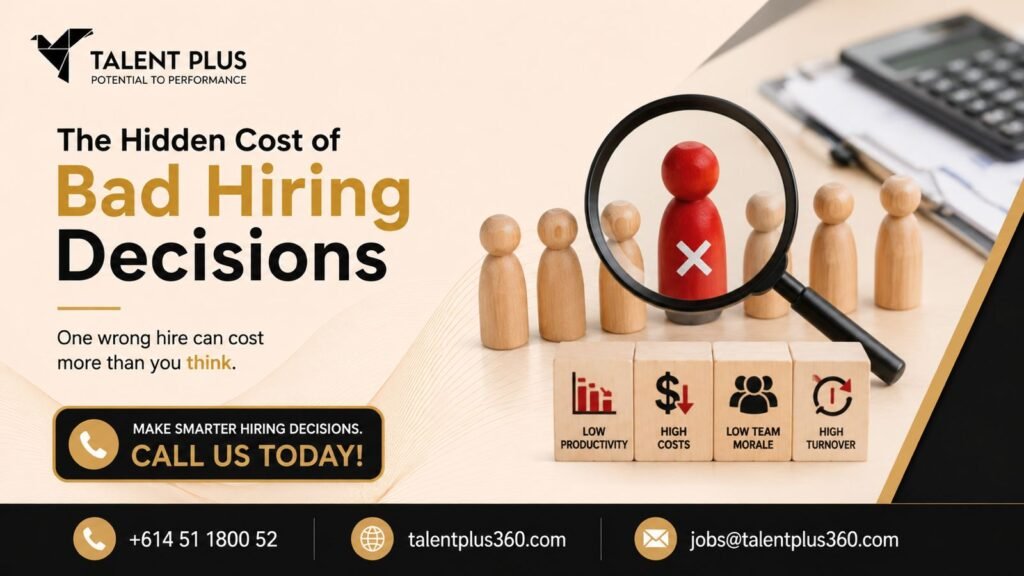
Hiring the wrong person is far more expensive than many businesses realize. Beyond recruitment costs, a poor hiring decision can impact productivity, team morale, customer satisfaction, and overall business performance. Every new hire should contribute to growth, but when the wrong candidate is selected, the consequences can affect an organization for months—or even years.
Making informed hiring decisions is no longer just an HR responsibility. It is a business strategy that directly influences long-term success. Investing time in finding the right talent today helps prevent costly mistakes tomorrow.
More Than Just Recruitment Costs
Many employers assume the cost of a bad hire is limited to advertising the position or conducting interviews. In reality, the financial impact extends much further. Businesses also spend money on onboarding, training, salaries, equipment, and management time before realizing the employee is not the right fit.
Replacing an unsuitable employee means repeating the entire recruitment process, resulting in additional expenses that could have been avoided with a stronger hiring strategy.
Productivity Takes a Hit
A poor hiring decision often affects the productivity of the entire team. Managers spend valuable time correcting mistakes, providing extra supervision, or redistributing workloads among existing employees.
As productivity declines, projects may fall behind schedule, customer expectations become harder to meet, and overall business efficiency suffers. The longer the issue remains unresolved, the greater the operational impact.
Team Morale Can Decline
Employees work best when they trust and support one another. When a team member lacks the required skills, motivation, or cultural fit, it can create frustration across the workplace.
High-performing employees may become overwhelmed by additional responsibilities, leading to lower job satisfaction and increased stress. Over time, this can contribute to higher employee turnover and reduced workplace engagement.
Customer Relationships May Be Affected
Employees often represent the face of a business. Hiring the wrong person can negatively influence customer interactions, service quality, and brand reputation.
Poor communication, missed deadlines, or inconsistent performance can reduce customer confidence and lead to lost business opportunities. Protecting client relationships begins with hiring professionals who reflect your company’s values and standards.
The Importance of Hiring for Cultural Fit
Technical skills are important, but they are only one part of successful recruitment. Candidates who align with your company’s culture, values, and goals are more likely to build positive relationships and contribute to long-term success.
Evaluating both skills and cultural compatibility helps businesses create stronger, more collaborative teams while reducing the risk of future hiring mistakes.
Improve Your Hiring Process
Reducing bad hiring decisions starts with a structured recruitment process. Clear job descriptions, thorough interviews, skills assessments, and reference checks provide valuable insights into each candidate’s suitability.
Using a consistent evaluation process also helps eliminate bias and improves the quality of hiring decisions across the organization.
Partner with Recruitment Specialists
Finding the right candidate requires expertise, market knowledge, and access to qualified talent. Experienced recruitment specialists understand industry requirements and know how to identify professionals who match both the role and the company culture.
At Talent Plus 360, we help Australian businesses make confident hiring decisions through tailored recruitment solutions. Our experienced team connects employers with skilled, pre-screened candidates who support long-term business growth while reducing the risk of costly hiring mistakes.
Final Thoughts
Bad hiring decisions affect far more than recruitment budgets. They can reduce productivity, impact employee morale, weaken customer relationships, and slow business growth. Taking a strategic approach to recruitment helps businesses avoid these hidden costs and build stronger, more successful teams.
By investing in smarter hiring practices and partnering with experienced recruitment professionals, organizations can improve hiring outcomes, retain top talent, and create a workforce that drives sustainable success for years to come.