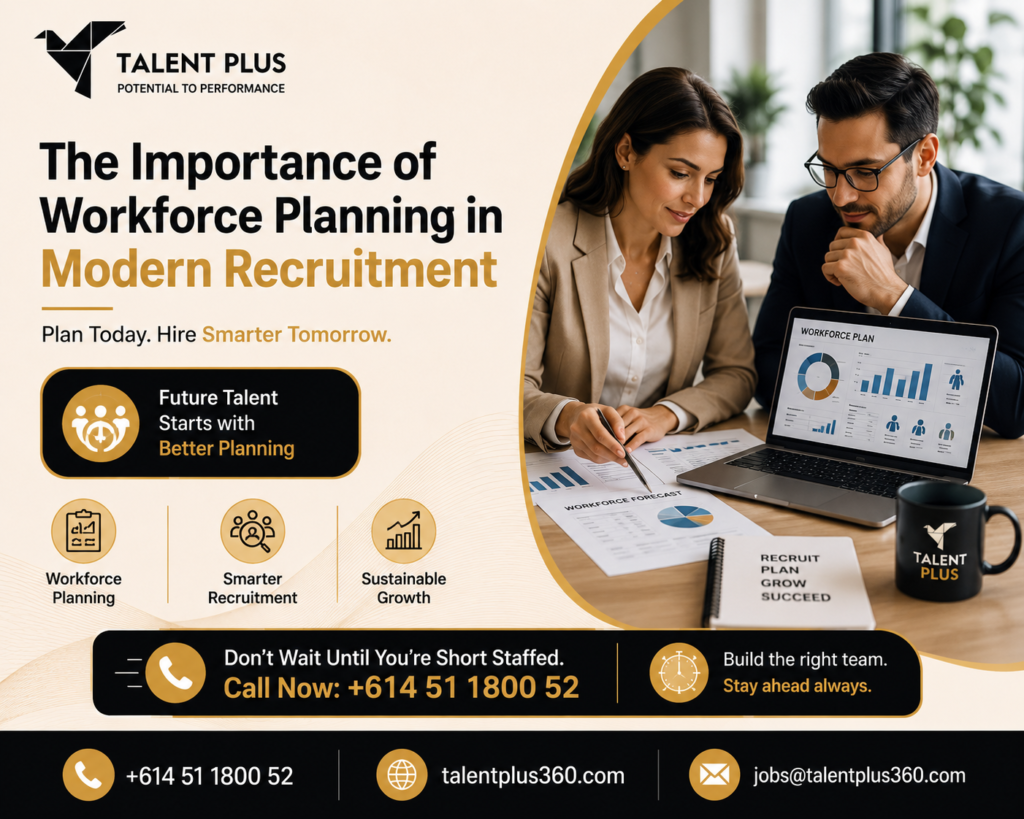
Recruitment is no longer just about filling vacant positions. In today’s fast-changing business environment, companies need a proactive hiring strategy that aligns with their long-term goals. Workforce planning helps organizations anticipate future staffing needs, ensuring they have the right people, with the right skills, at the right time.
A well-planned workforce strategy reduces hiring delays, improves productivity, and prepares businesses to adapt to market changes. Companies that invest in workforce planning are better positioned for sustainable growth and long-term success.
What Is Workforce Planning?
Workforce planning is the process of analysing current staffing levels, forecasting future talent requirements, and developing recruitment strategies to meet business objectives. It helps organizations understand where skill gaps exist and how to address them before they become major challenges.
Rather than reacting to staffing shortages, businesses can make informed hiring decisions that support both immediate and future operational needs.
Reduces Skill Gaps
One of the biggest benefits of workforce planning is identifying potential skill shortages before they impact business performance. By evaluating workforce capabilities and future business demands, employers can recruit candidates with the expertise needed to stay competitive.
This proactive approach ensures organizations always have access to skilled professionals who can contribute to business growth and innovation.
Improves Recruitment Efficiency
Without a clear hiring plan, recruitment can become costly and time-consuming. Workforce planning allows businesses to prioritize critical roles, streamline recruitment processes, and reduce unnecessary hiring expenses.
Having a structured recruitment strategy also shortens the hiring cycle, enabling organizations to secure top talent before competitors do.
Supports Business Growth
As businesses expand, their workforce requirements naturally evolve. Workforce planning helps organizations prepare for growth by forecasting future hiring needs based on expansion plans, new projects, or changing customer demands.
With the right recruitment strategy in place, businesses can scale confidently without facing unexpected staffing shortages.
Enhances Employee Retention
Effective workforce planning isn’t only about hiring new employees—it also focuses on retaining existing talent. Understanding career progression opportunities and future workforce needs allows businesses to invest in employee development and internal promotions.
Employees who see opportunities for growth are more likely to remain engaged and committed to the organization, reducing turnover and improving workplace stability.
Enables Better Decision-Making
Modern workforce planning relies on workforce data, hiring trends, and performance insights to support strategic decisions. Business leaders can identify recruitment patterns, forecast future talent demands, and allocate hiring budgets more effectively.
Data-driven planning reduces uncertainty and allows organizations to make smarter recruitment decisions that align with long-term business objectives.
Strengthens Workforce Flexibility
Today’s business landscape is constantly evolving due to technological advancements, economic changes, and shifting customer expectations. Workforce planning helps organizations build flexible teams that can quickly adapt to new challenges and opportunities.
A well-prepared workforce enables businesses to respond confidently to changing market conditions while maintaining operational efficiency.
Partner with Recruitment Experts
Creating an effective workforce plan requires industry knowledge and recruitment expertise. Working with experienced recruitment specialists provides access to market insights, talent availability, and strategic hiring solutions that support long-term workforce success.
At Talent Plus 360, we help Australian businesses develop workforce planning strategies that align recruitment with business goals. Our tailored talent acquisition solutions ensure organizations have access to skilled professionals who contribute to sustainable growth and long-term success.
Final Thoughts
Workforce planning is an essential part of modern recruitment. By forecasting future hiring needs, reducing skill gaps, and improving recruitment efficiency, businesses can build resilient teams that are prepared for future challenges.
Organizations that combine strategic workforce planning with smart talent acquisition gain a competitive advantage in today’s evolving job market. Investing in workforce planning today creates a stronger, more adaptable workforce that drives business success for years to come.