
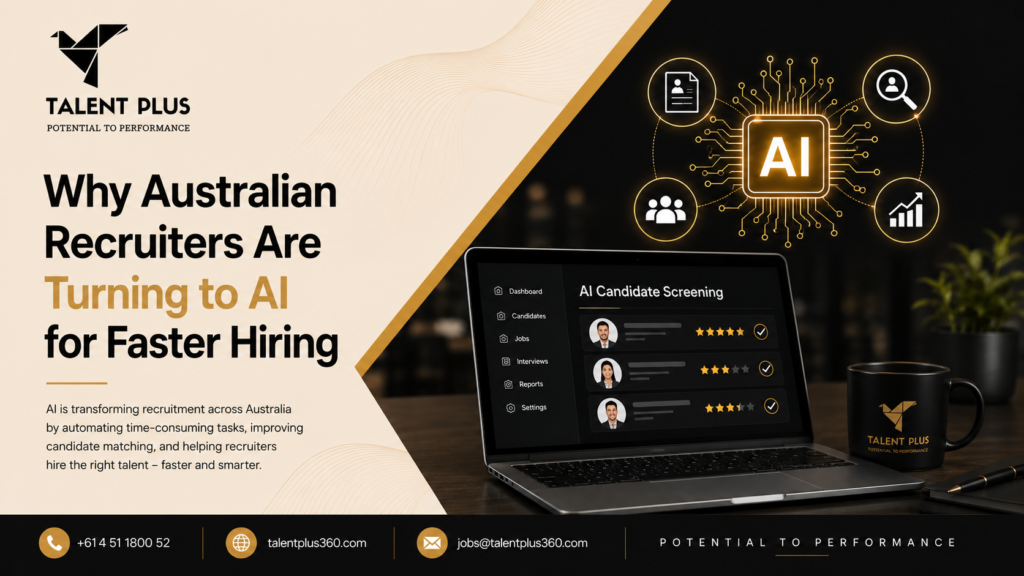
The recruitment industry has experienced significant changes over the past few years. As organizations face growing competition for talent, recruiters are expected to fill positions efficiently while maintaining high standards throughout the hiring process. This increasing demand has encouraged businesses to explore smarter ways to attract and manage candidates.
Traditional recruitment methods remain valuable, but they often involve repetitive tasks that consume considerable time and resources. Reviewing applications, arranging interviews, tracking candidates, and maintaining communication can become overwhelming, especially when handling multiple vacancies simultaneously.
To overcome these challenges, many recruiters are embracing artificial intelligence. AI-powered recruitment solutions are helping businesses improve efficiency, enhance candidate experiences, and make better hiring decisions based on data and insights.
At Talent Plus 360, we understand the importance of combining innovative recruitment technology with human expertise to deliver smarter talent solutions for businesses across Australia.
The Evolution of Recruitment
Recruitment has changed dramatically with the rise of digital technologies and changing workforce expectations. Employers are no longer relying solely on traditional methods to attract and evaluate candidates.
Modern recruitment requires speed, consistency, and the ability to manage large volumes of applications effectively. Businesses are seeking tools that simplify processes without compromising candidate quality.
Artificial intelligence has emerged as one of the most significant developments in talent acquisition. It provides recruiters with valuable support while allowing them to focus on more strategic aspects of hiring.
As a result, AI is becoming an increasingly important component of modern recruitment practices.
Understanding Artificial Intelligence in Recruitment
Artificial intelligence refers to technology that can process information, recognize patterns, and support decision-making processes. In recruitment, AI helps automate repetitive tasks and improve overall efficiency.
Recruiters use AI to screen resumes, organize candidate databases, schedule interviews, and analyze recruitment trends. These technologies reduce manual effort and enable teams to manage hiring processes more effectively.
AI does not replace recruiters. Instead, it acts as a support system that enhances productivity and enables professionals to focus on building stronger relationships with candidates and clients.
This balance between technology and human expertise creates a more effective and responsive recruitment process.
Managing Large Volumes of Applications
Many organizations receive hundreds of applications for a single vacancy. Reviewing every resume manually can be time-consuming and may delay the hiring process.
AI-powered systems can quickly evaluate applications and identify candidates whose skills and experience align with specific job requirements. This allows recruiters to prioritize qualified individuals more efficiently.
Automated screening helps reduce administrative workload while improving consistency in candidate evaluations. It also ensures that recruiters spend more time engaging with the most suitable applicants.
As application volumes continue to increase, AI provides valuable support in managing recruitment demands effectively.
Improving Candidate Matching
Modern AI systems are capable of analyzing much more than simple keywords. They can assess qualifications, industry experience, skills, and career progression to determine how closely candidates align with particular roles.
This deeper level of analysis helps recruiters identify talent that may otherwise be overlooked during manual reviews. Better matching often leads to stronger placements and improved employee retention.
By providing more accurate recommendations, AI enables organizations to make informed hiring decisions based on objective criteria. This contributes to long-term workforce success.
Recruiters can therefore focus on finding candidates who are not only qualified but also aligned with organizational goals.
Reducing Administrative Burden
Recruitment involves numerous repetitive activities that consume valuable time. Scheduling interviews, updating candidate records, tracking applications, and maintaining communication all require continuous attention.
AI-powered automation helps streamline these tasks and reduce administrative pressures on recruitment teams. This allows recruiters to allocate more time to relationship building and strategic planning.
Less administrative work also improves productivity and enhances the overall recruitment experience for both candidates and employers. Efficient processes contribute to better outcomes across every stage of hiring.
Organizations that embrace automation often benefit from improved operational efficiency and stronger recruitment performance.
Enhancing Candidate Experience
Candidate experience has become a critical factor in successful recruitment. Job seekers expect timely communication, transparency, and efficient hiring processes.
Delays and inconsistent communication can negatively affect employer branding and cause strong candidates to pursue opportunities elsewhere. AI tools help address these challenges by improving responsiveness and streamlining communication.
Automated updates, scheduling assistance, and faster application processing create a smoother experience for applicants. Positive experiences contribute to stronger employer reputations and higher candidate satisfaction.
A well-managed recruitment process helps organizations attract and retain quality talent more effectively.
Supporting Better Decision-Making
Recruitment decisions are most effective when supported by reliable information and meaningful insights. AI provides recruiters with access to valuable data regarding candidate pools, hiring trends, and recruitment performance.
These insights enable businesses to make more informed decisions and identify opportunities for improvement. Data-driven recruitment strategies often lead to stronger workforce outcomes and better resource allocation.
By reducing reliance on assumptions, AI helps organizations improve accuracy throughout the hiring process. This contributes to higher-quality placements and greater long-term success.
Evidence-based recruitment practices are becoming increasingly important in today’s competitive job market.
Saving Valuable Time
Time efficiency remains one of the biggest advantages of AI adoption in recruitment. Tasks that previously required hours of manual effort can now be completed in a fraction of the time.
This allows recruiters to focus on activities that require human interaction, such as interviewing candidates, understanding client requirements, and providing career guidance.
Improved efficiency also enables recruitment teams to manage larger workloads without sacrificing service quality. Businesses benefit from faster processes and improved productivity.
Time savings create opportunities for recruiters to deliver greater value throughout the hiring journey.
Helping Recruiters Focus on Human Relationships
Despite advances in technology, recruitment remains fundamentally people-oriented. Successful hiring depends on communication, empathy, trust, and understanding individual career aspirations.
Artificial intelligence can process information efficiently, but it cannot replace human judgment and relationship-building skills. Recruiters continue to play a critical role in evaluating cultural fit and understanding candidate motivations.
By automating repetitive tasks, AI allows recruiters to spend more time on meaningful interactions with clients and job seekers. This combination strengthens the overall recruitment experience.
Technology works best when it complements rather than replaces human expertise.
Improving Recruitment Scalability
As businesses expand, recruitment demands naturally increase. Managing larger candidate pools and multiple vacancies can become challenging without efficient systems.
AI helps organizations scale their recruitment activities by automating processes and improving workflow management. This enables teams to maintain consistency while supporting growth.
Scalable recruitment systems are particularly valuable for organizations experiencing rapid expansion or high-volume hiring requirements. They help maintain service quality without significantly increasing operational costs.
Technology enables businesses to respond more effectively to changing workforce needs.
Encouraging Diversity and Inclusion
Many organizations are committed to building diverse and inclusive workplaces. Structured recruitment processes play an important role in supporting these objectives.
When implemented responsibly, AI can help standardize candidate evaluations and promote greater consistency during screening stages. This reduces certain forms of unconscious bias and encourages fairer assessments.
More inclusive recruitment practices contribute to broader talent pools and stronger organizational cultures. Diversity remains a key driver of innovation and long-term business success.
Balanced hiring approaches help organizations create more representative and productive teams.
Addressing Common Concerns About AI
Some people believe that artificial intelligence will eventually replace recruiters entirely. However, AI is designed to support recruitment professionals rather than eliminate their roles.
Technology excels at processing information and automating repetitive tasks, but it cannot replicate empathy, communication skills, and human intuition. These qualities remain essential in recruitment.
Successful hiring requires understanding people, building trust, and evaluating factors that extend beyond data alone. Human expertise continues to play a central role in recruitment decisions.
The most effective recruitment strategies combine advanced technology with experienced professionals.
The Future of Recruitment
Artificial intelligence will continue to shape the future of recruitment and talent acquisition. As technology evolves, organizations will have access to even more sophisticated tools and insights.
Future developments are expected to improve workforce planning, candidate engagement, and predictive analytics. Businesses that embrace innovation are likely to gain a competitive advantage in attracting talent.
Recruitment technology will continue to evolve, but human relationships will remain at the heart of successful hiring. Organizations must balance automation with personalized experiences.
Adapting to these changes will be essential for long-term recruitment success.
Why Talent Plus 360 Supports Modern Recruitment Solutions
At Talent Plus 360, we believe that effective recruitment combines technology, expertise, and personalized service. Our approach focuses on delivering innovative solutions that help businesses secure high-quality talent while maintaining strong candidate relationships.
We understand the challenges facing employers in today’s dynamic workforce environment. By leveraging modern recruitment strategies, we help organizations improve efficiency and strengthen their hiring processes.
Our commitment to service excellence, industry expertise, and workforce solutions enables us to support businesses across various sectors throughout Australia. We strive to create lasting value for both employers and job seekers.
Whether your organization is expanding or seeking specialized talent, Talent Plus 360 is committed to helping you build stronger and more successful teams.
Final Thoughts
Artificial intelligence is transforming the recruitment industry by helping organizations improve efficiency, enhance candidate experiences, and support better hiring decisions. Rather than replacing recruiters, AI empowers professionals to focus on relationship building and strategic workforce planning.
As recruitment continues to evolve, businesses that embrace innovation will be better positioned to attract and retain top talent. Combining technology with human expertise creates a stronger and more effective hiring process.
Organizations seeking sustainable growth should view AI as a valuable partner in talent acquisition. When used effectively, it can deliver significant benefits for employers, recruiters, and candidates alike.
At Talent Plus 360, we are proud to support businesses with modern recruitment solutions designed to build stronger workforces and drive long-term success.