
Artificial Intelligence has transformed the modern workplace faster than many businesses expected. From automated customer support to AI-powered data analysis, companies across industries are adopting smart technologies to improve productivity and reduce operational costs. While AI has created exciting opportunities, it has also raised serious concerns about job security and workforce stability.
Over the last few years, many organisations reduced hiring or replaced certain job roles with AI-driven systems. Tasks such as data entry, scheduling, customer queries, and repetitive administrative work became easier to automate. Businesses believed AI could deliver faster results while lowering expenses and improving efficiency across departments.
However, the reality has been more complex than expected. Many companies are now discovering that AI alone cannot fully replace human skills, decision-making, and emotional intelligence. As a result, businesses are slowly bringing back human workers to balance technology with real-world expertise and customer expectations.
How AI Changed the Employment Landscape
AI has significantly changed the way businesses operate in sectors like healthcare, finance, retail, recruitment, and marketing. Companies are now using automation tools to streamline workflows, improve customer experiences, and manage large volumes of information more effectively. This shift has increased productivity while reducing the time needed for routine operations.
Despite these benefits, the rapid adoption of AI also created fear among employees and job seekers. Many workers worried that automation would permanently replace traditional job roles. Industries that relied heavily on repetitive tasks experienced major workforce reductions as companies focused on digital transformation and cost-cutting strategies.
At the same time, AI created new career opportunities in areas such as machine learning, AI management, cybersecurity, and digital operations. Businesses now require professionals who can manage, monitor, and improve AI systems while ensuring accuracy, compliance, and ethical workplace practices.
Why Businesses Are Bringing Back Human Workers
Although AI systems can process information quickly, they still struggle with creativity, emotional understanding, and complex decision-making. Businesses have realised that customers often prefer interacting with real people, especially during sensitive situations that require empathy, communication, and trust-building skills.
Many organisations also faced operational challenges after replacing too many employees with automation. AI-generated errors, inaccurate recommendations, and poor customer experiences forced companies to reconsider their workforce strategies. Human oversight became essential to maintain service quality and ensure better business outcomes.
In industries like recruitment and talent management, human judgment remains highly valuable. Employers understand that hiring decisions involve more than matching keywords or analysing resumes. Building strong workplace cultures, assessing soft skills, and understanding candidate potential require experienced professionals who can connect with people effectively.
The Rise of Human and AI Collaboration
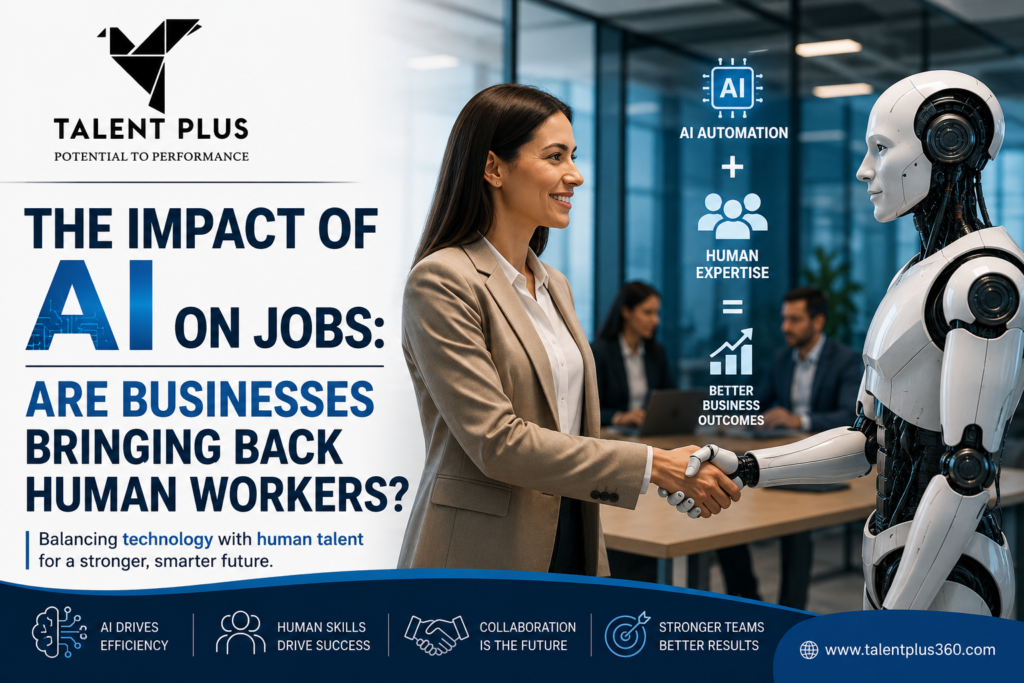
Rather than replacing workers completely, many businesses are now focusing on combining human expertise with AI technology. This hybrid approach allows organisations to improve efficiency while maintaining creativity, innovation, and strong customer relationships. AI supports employees by handling repetitive tasks, allowing teams to focus on strategic work.
Human-AI collaboration is becoming increasingly common in recruitment, marketing, customer support, and project management. Employees can use AI tools to analyse trends, generate insights, and automate administrative tasks while still applying human thinking and communication skills to achieve better results.
This balanced approach is helping businesses create smarter and more adaptable workplaces. Companies that integrate AI responsibly are discovering that technology works best when it supports employees instead of replacing them entirely. The future of work will depend on collaboration between technology and human intelligence.
The Importance of Human Skills in the AI Era
As automation continues to grow, human skills are becoming even more valuable in the workplace. Skills such as leadership, creativity, emotional intelligence, problem-solving, and adaptability cannot easily be replicated by AI systems. Employers are now prioritising these qualities when building future-ready teams.
Businesses also recognise the importance of maintaining strong workplace relationships and company culture. Human employees contribute ideas, collaboration, and innovation that help organisations grow and stay competitive in changing markets. AI can assist with processes, but it cannot fully replace human connection and teamwork.
This shift is encouraging professionals to focus on upskilling and continuous learning. Employees who combine technical knowledge with strong interpersonal abilities are more likely to succeed in the evolving job market. Companies are increasingly investing in training programs to help workers adapt to AI-driven environments.
How Recruitment Companies Are Adapting to AI
Recruitment agencies are playing a crucial role in helping businesses navigate changing workforce trends. Modern hiring strategies now involve a combination of advanced technology and personalised talent solutions. Companies need recruitment partners who understand both AI-driven hiring tools and human workforce requirements.
At Talent Plus 360, businesses receive strategic recruitment support designed for the future of work. The company helps organisations identify skilled professionals while adapting to changing industry demands and workforce technologies. Their expertise ensures businesses can build strong, flexible, and future-ready teams.
Talent Plus 360 focuses on creating long-term hiring solutions that balance innovation with human expertise. By understanding industry trends, recruitment challenges, and evolving business needs, the company helps employers attract top talent while maintaining sustainable workforce growth in competitive markets.
What the Future of Work Looks Like
The future workplace will not be entirely human-driven or fully automated. Instead, businesses will continue developing environments where AI and employees work together to improve productivity, innovation, and customer satisfaction. Companies that successfully balance technology and human talent will achieve stronger long-term results.
AI will continue reshaping industries, but human workers will remain essential for leadership, creativity, communication, and strategic decision-making. Businesses are learning that technology should enhance workforce capabilities rather than replace the people who drive organisational success and meaningful customer experiences.
As organisations adapt to changing market conditions, the demand for skilled and adaptable professionals will continue growing. Businesses that invest in both technology and human talent will be better prepared for future challenges while creating more sustainable and productive workplaces.
Final Thoughts
AI has undoubtedly changed the modern employment landscape, but it has not eliminated the need for human workers. Instead, businesses are recognising the importance of balancing automation with real human expertise. Companies that rely solely on AI may struggle with creativity, customer relationships, and complex decision-making processes.
The growing trend of rehiring human employees highlights the value of emotional intelligence, adaptability, and strategic thinking in today’s workforce. Businesses now understand that successful growth depends on combining advanced technology with skilled professionals who can lead innovation and build strong workplace cultures.
As the future of work continues evolving, organisations must focus on creating balanced workforce strategies that embrace both AI and human potential. With the right recruitment support and workforce planning, businesses can successfully adapt to changing industry demands while maintaining long-term success and employee engagement.